- Shop
- TREASURE CHEST: Antique Hand-Painted Japanese Floral Porcelain Vanity Tray with Pierced Handle
TREASURE CHEST: Antique Hand-Painted Japanese Floral Porcelain Vanity Tray with Pierced Handle
TREASURE CHEST: Antique Hand-Painted Japanese Floral Porcelain Vanity Tray with Pierced Handle
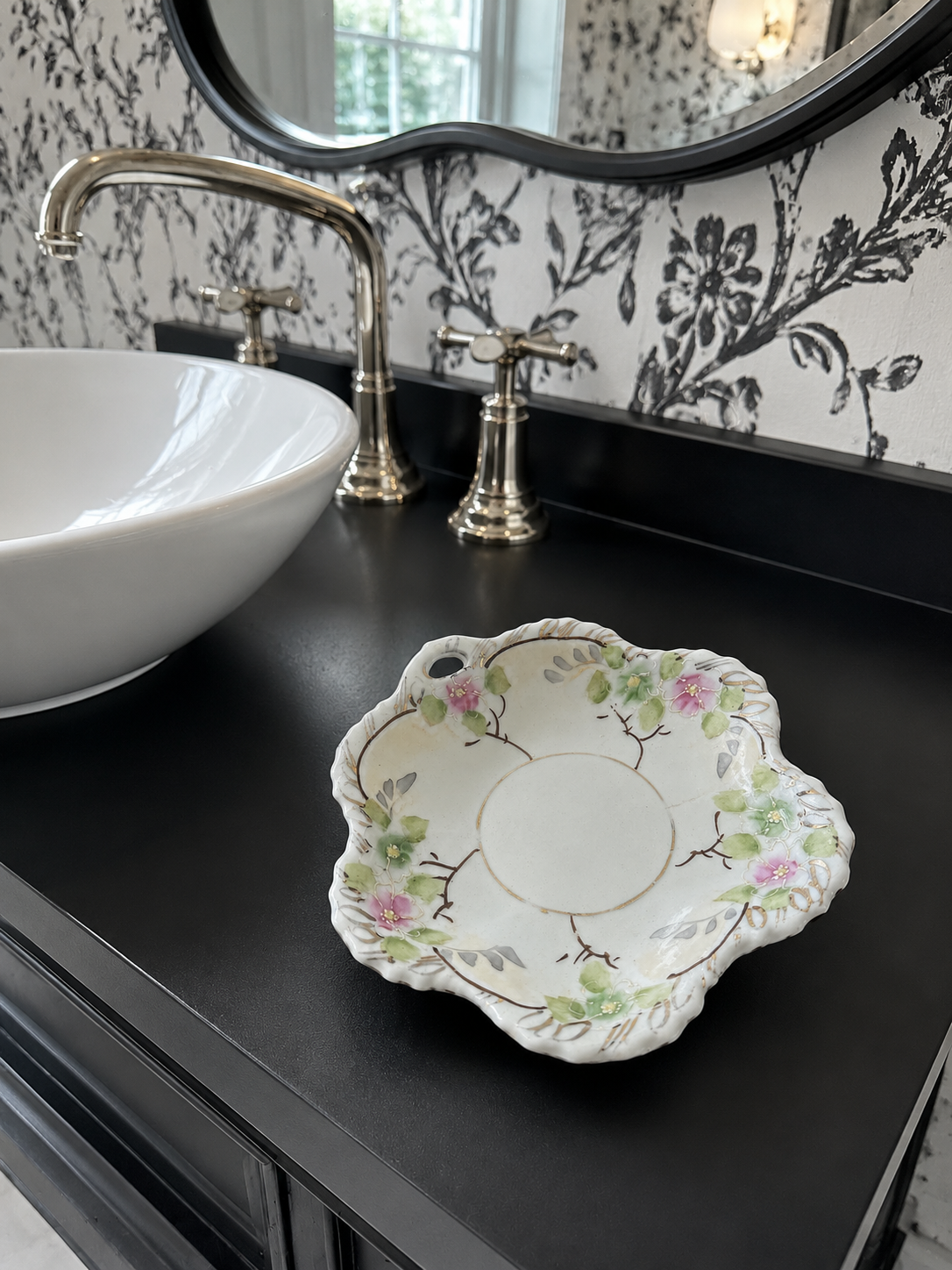
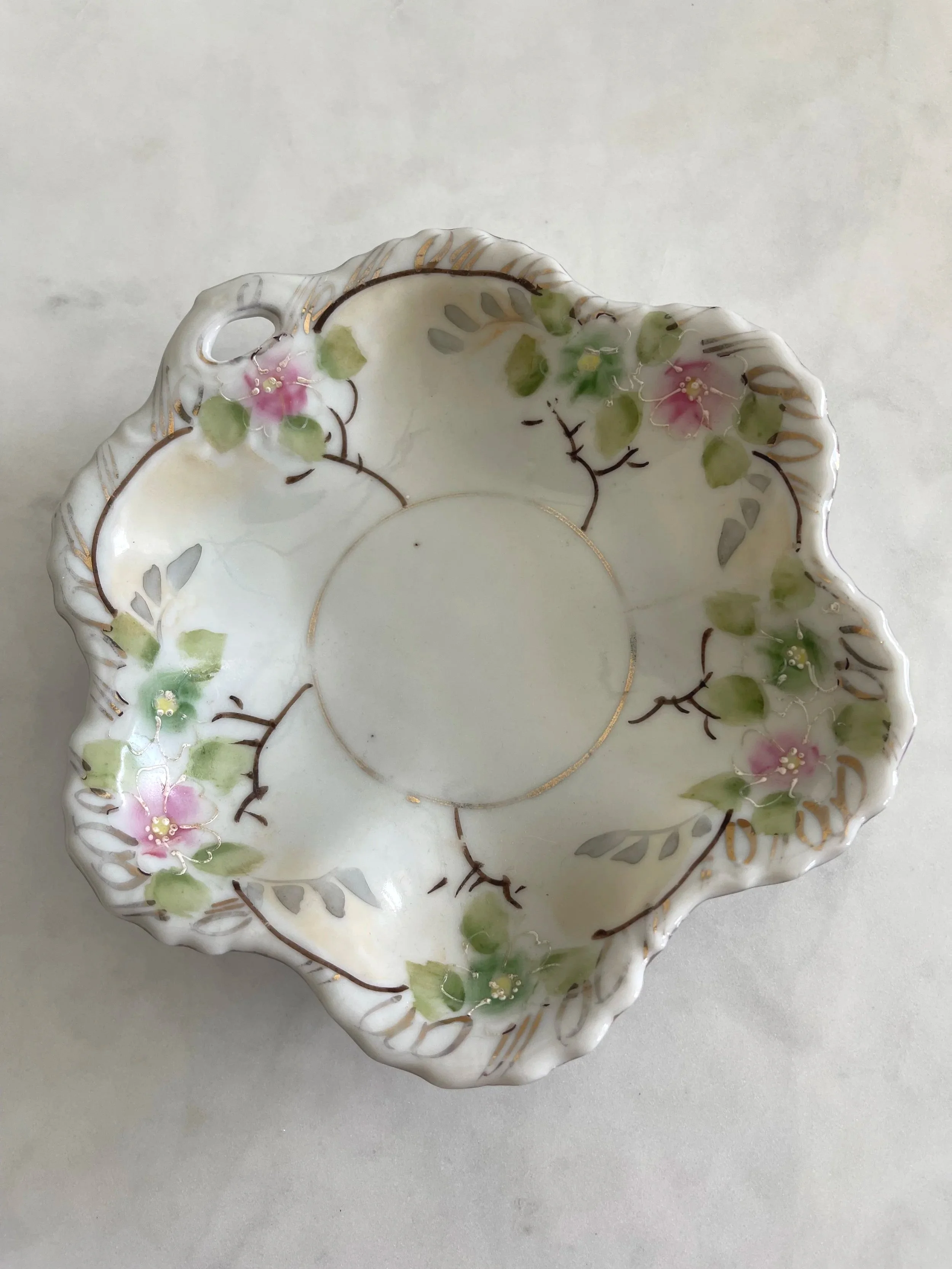
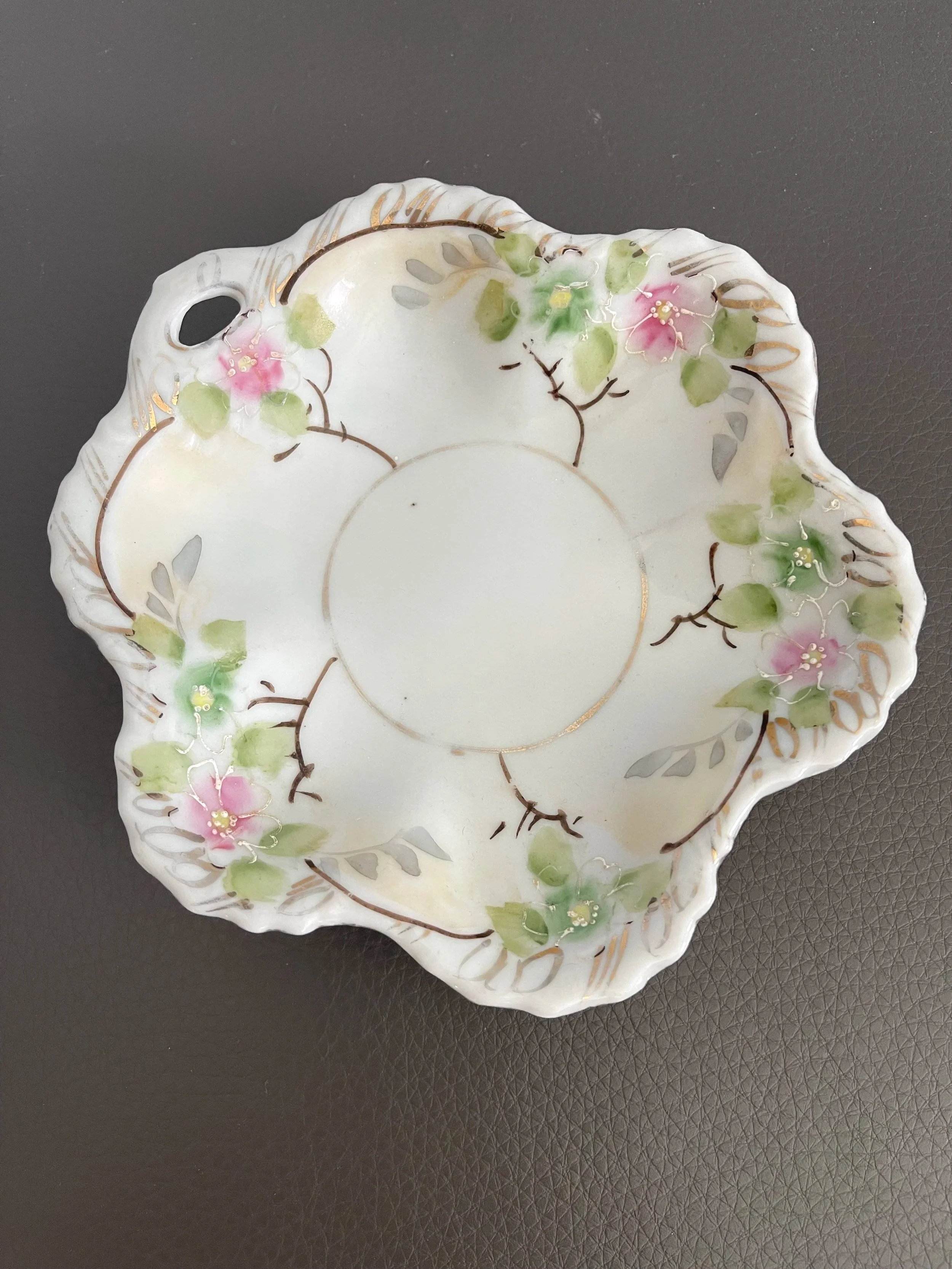
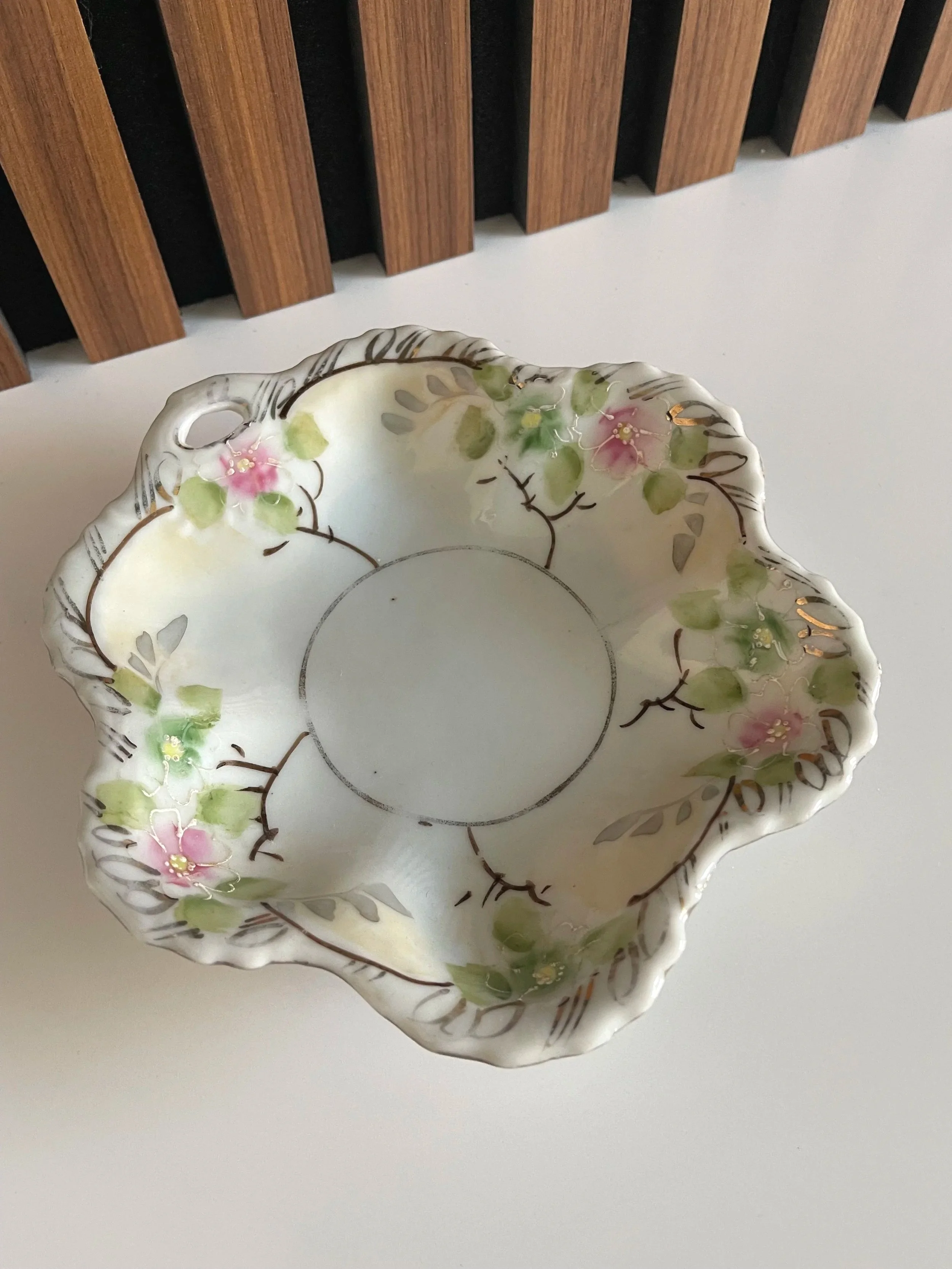
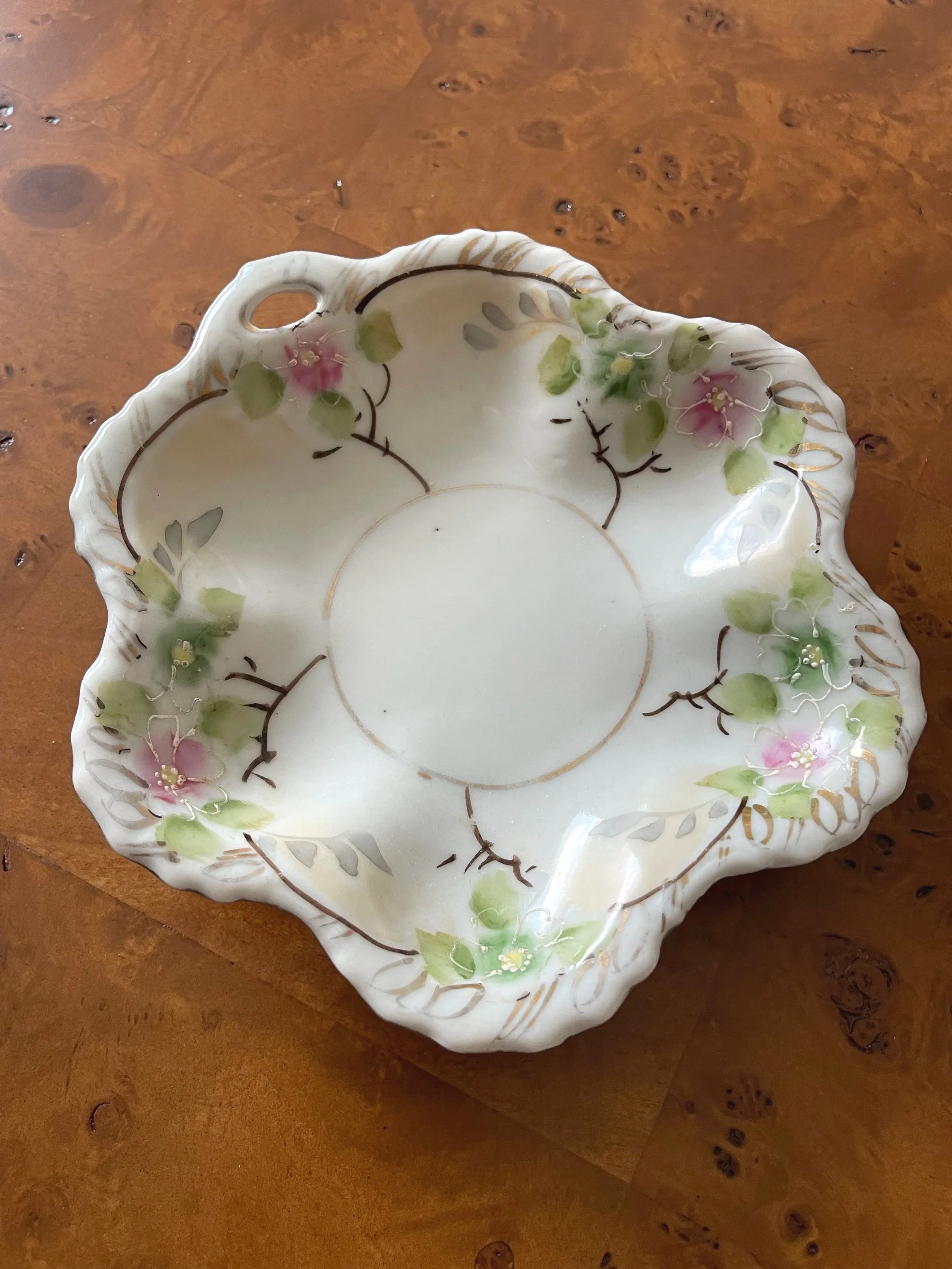
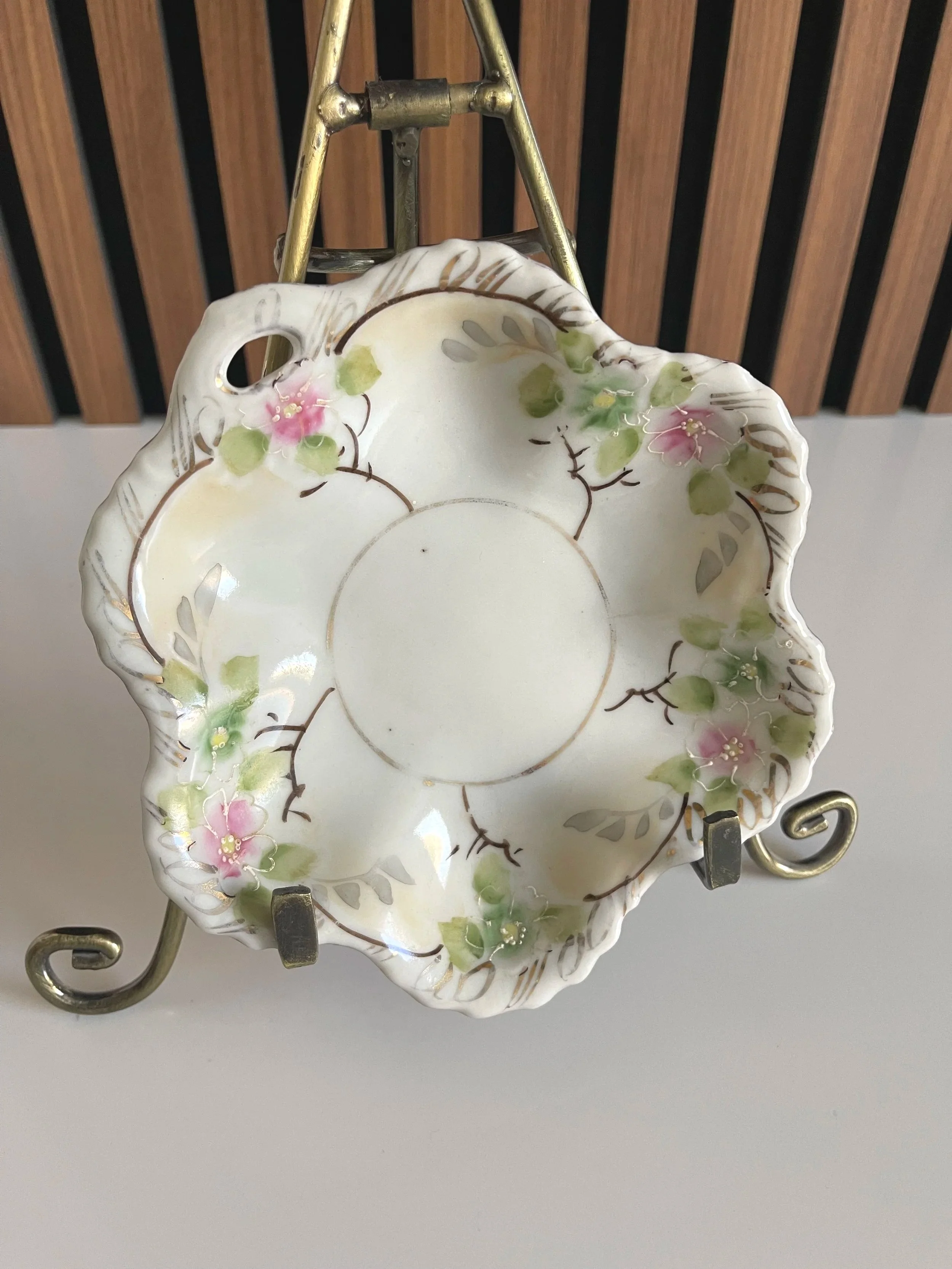
This 6-inch round trinket dish stands out for its exquisite, delicate hand-painted artistry. The scalloped edges are adorned with elegant gold-gilded flourishes that frame a beautiful arrangement of pastel pink blossoms and soft green leaves. Adding to its unique charm, subtle raised dotting accentuates the flowers, lending a tactile texture and depth that reflects the careful attention of the artisan. A delicate open-handle cutout on one of the petals completes its elegant silhouette, making it an eye-catching vintage accent piece for any tabletop.
Excellent condition. No chips, cracks. Measures 6 inches around. it is a scalloped flower shape, designed to mimic the natural look of a blooming flower.
Perfectly sized for versatile everyday utility, this charming dish serves as an elegant holder for your most treasured possessions. It functions beautifully as a vanity tray to cradle delicate rings, earrings, and necklaces at the end of the day, or as a decorative tray on an entryway console to keep keys neatly organized. Whether placed on a bedside table, displayed as part of a vintage collection, or used to hold small items in a powder room, this versatile piece brings a touch of historical elegance and functional beauty to any space.
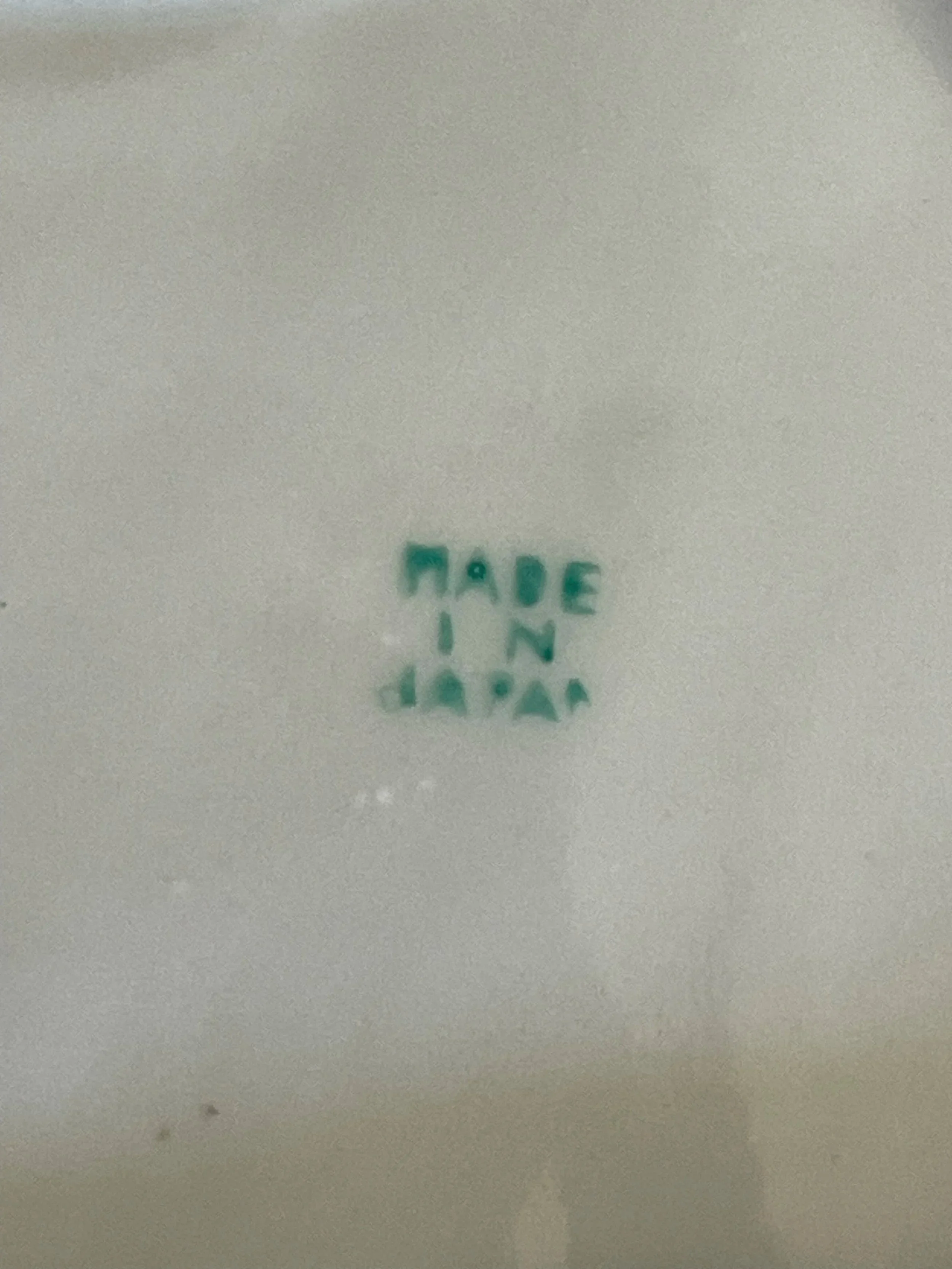
This green, block-letter "MADE IN JAPAN" backstamp provides key clues to dating the porcelain trinket dish.
Era and Dating
Production Window: This specific style of stamp indicates the piece was manufactured between 1921 and February 1947.
The Tariff Act Transition: In 1921, United States customs laws updated formatting requirements. Export goods were required to list the country of origin in English using the native spelling ("Japan" or "Made in Japan") rather than the Japanese term "Nippon," which was commonly stamped from 1891 to 1921.
Why Not Later? After World War II, items exported during the Allied occupation (1947–1952) specifically carried a "Made in Occupied Japan" stamp. Post-1952 wares typically transitioned to different ink colors, stylized company logos, or simpler "Japan" scripts.
This 6-inch round trinket dish stands out for its exquisite, delicate hand-painted artistry. The scalloped edges are adorned with elegant gold-gilded flourishes that frame a beautiful arrangement of pastel pink blossoms and soft green leaves. Adding to its unique charm, subtle raised dotting accentuates the flowers, lending a tactile texture and depth that reflects the careful attention of the artisan. A delicate open-handle cutout on one of the petals completes its elegant silhouette, making it an eye-catching vintage accent piece for any tabletop.
Excellent condition. No chips, cracks. Measures 6 inches around. it is a scalloped flower shape, designed to mimic the natural look of a blooming flower.
Perfectly sized for versatile everyday utility, this charming dish serves as an elegant holder for your most treasured possessions. It functions beautifully as a vanity tray to cradle delicate rings, earrings, and necklaces at the end of the day, or as a decorative tray on an entryway console to keep keys neatly organized. Whether placed on a bedside table, displayed as part of a vintage collection, or used to hold small items in a powder room, this versatile piece brings a touch of historical elegance and functional beauty to any space.
This green, block-letter "MADE IN JAPAN" backstamp provides key clues to dating the porcelain trinket dish.
Era and Dating
Production Window: This specific style of stamp indicates the piece was manufactured between 1921 and February 1947.
The Tariff Act Transition: In 1921, United States customs laws updated formatting requirements. Export goods were required to list the country of origin in English using the native spelling ("Japan" or "Made in Japan") rather than the Japanese term "Nippon," which was commonly stamped from 1891 to 1921.
Why Not Later? After World War II, items exported during the Allied occupation (1947–1952) specifically carried a "Made in Occupied Japan" stamp. Post-1952 wares typically transitioned to different ink colors, stylized company logos, or simpler "Japan" scripts.