- Shop
- TREASURE CHEST: Antique German 9.25 inch Majolica Plate - Model 230 - "Birds and Grapes" by Zeller Keramik
TREASURE CHEST: Antique German 9.25 inch Majolica Plate - Model 230 - "Birds and Grapes" by Zeller Keramik
TREASURE CHEST: Antique German 9.25 inch Majolica Plate - Model 230 - "Birds and Grapes" by Zeller Keramik
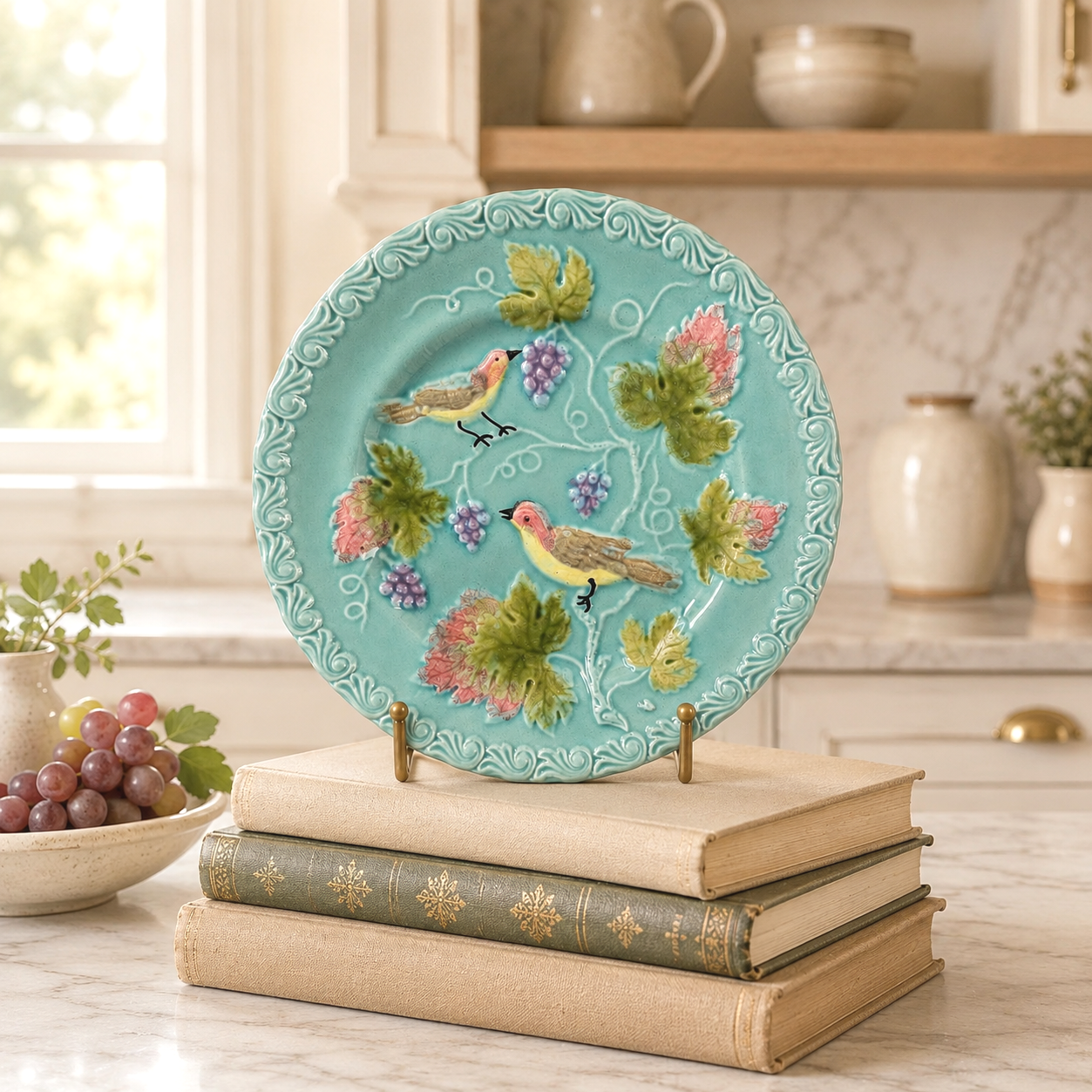
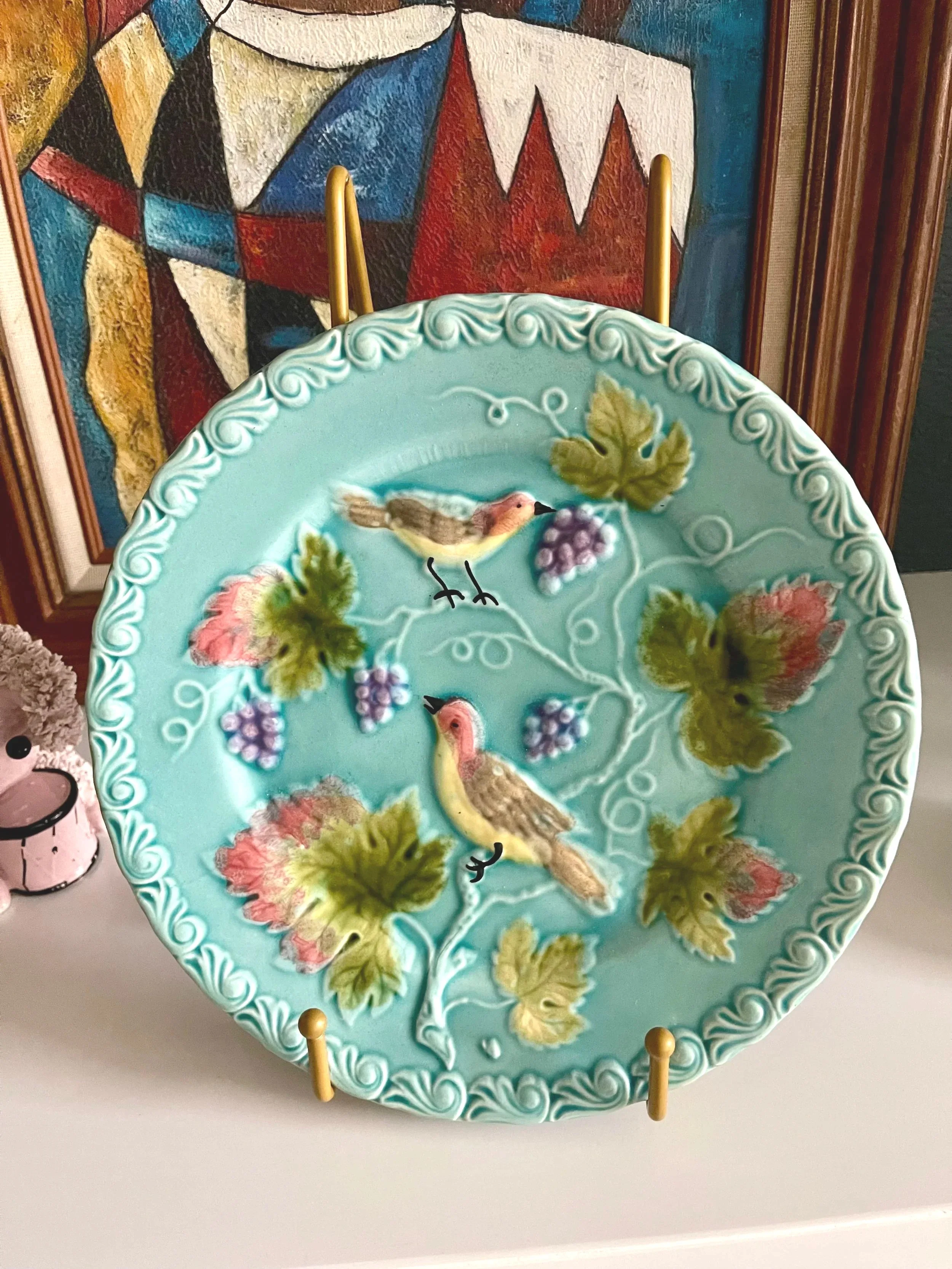
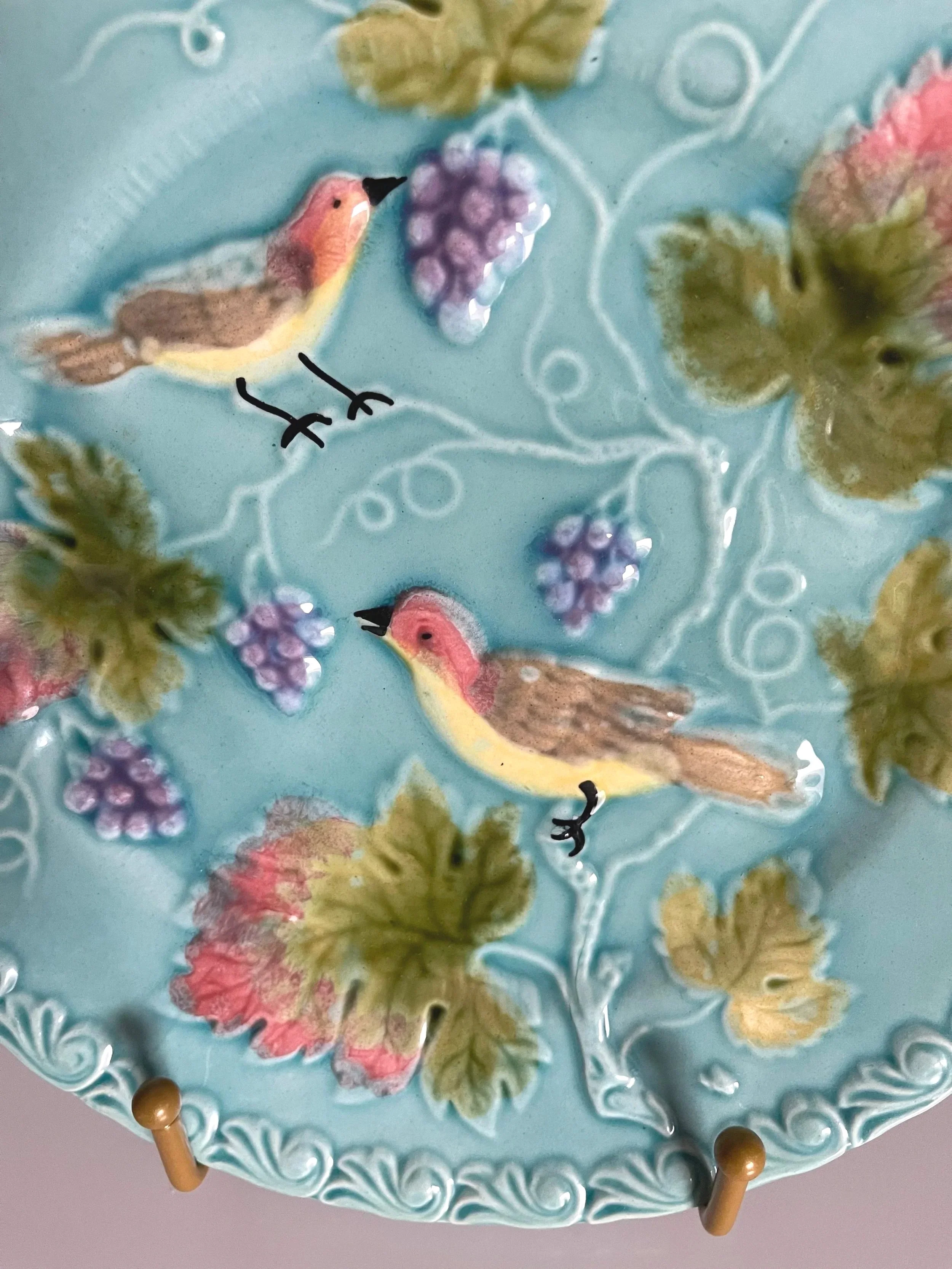
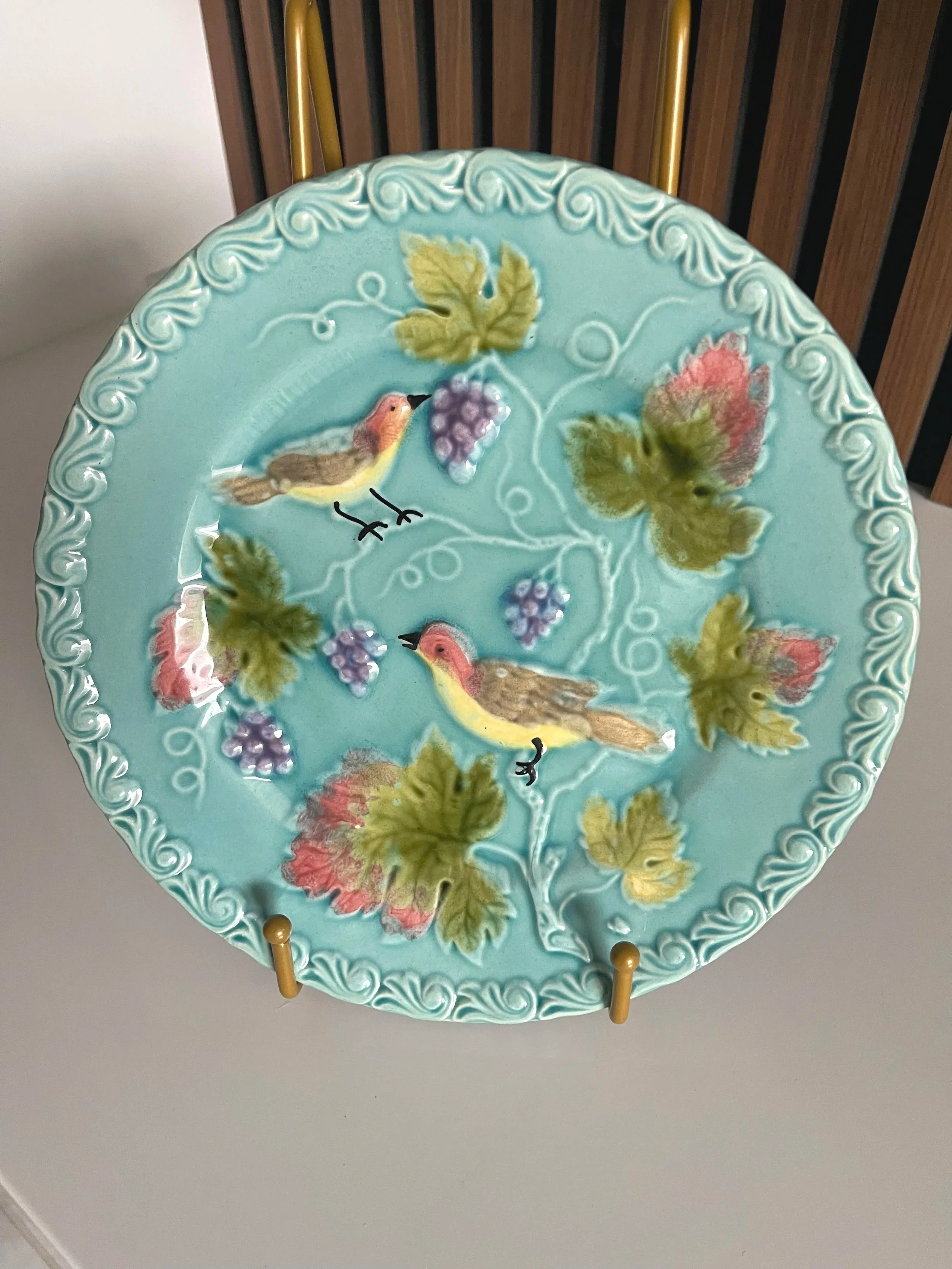
This object is an authentic antique German majolica plate (Model 230), meticulously crafted between 1907 and 1928 by the Georg Schmider factory in Zell am Harmersbach (Zeller Keramik), located in Germany’s historic Black Forest region. The piece is distinguished by its vibrant, high-gloss turquoise tin-glaze background, which showcases an intricate, high-relief molded design of two songbirds perched amidst climbing grapevines, ripe purple grape clusters, and detailed autumn foliage. On the reverse, the plate bears the definitive underglaze green "GZ" shield backstamp and the deeply impressed factory mold number 230, marking it as a premium specimen of early 20th-century European earthenware art pottery.
Excellent condition. No cracks. Teeny, teeny tiny chippy spot of paint loss on reverse side of plate where a plate hanger once held it onto a plate wall. Does not effect the front side of plate in any way. Bright and cheerful. Vivid color. Today, this antique dish seamlessly blends history with modern functionality. Always hand-wash only to protect the delicate hand-painting and glaze.
In 2026, this century-old plate has found renewed relevance at the forefront of the "Maximalist Eclectic" and "Whimsical Nature" interior design movements. As homeowners move decisively away from flat, sterile textures, designers are utilizing high-relief majolica to add literal dimension, rich organic color, and historical narrative to living spaces. The striking combination of vivid turquoise and sculpted pottery makes it highly sought after for creating curated, three-dimensional "plate walls" and dynamic tablescapes that seamlessly blend old-world European charm with contemporary maximalist styling.
Furthermore, this Zell plate stands as a remarkably well-preserved example of historic ceramic engineering and artisanal craftsmanship. Majolica’s soft earthenware body makes it notoriously fragile and prone to destruction, meaning pieces that have survived the geopolitical shifts of Europe over the last hundred years intact are increasingly rare. In a 2026 consumer market that deeply prizes authenticity and sustainable preservation over mass-produced replicas, this authentic Black Forest artifact offers collectors a tangible, durable connection to pre-war European artistic history.
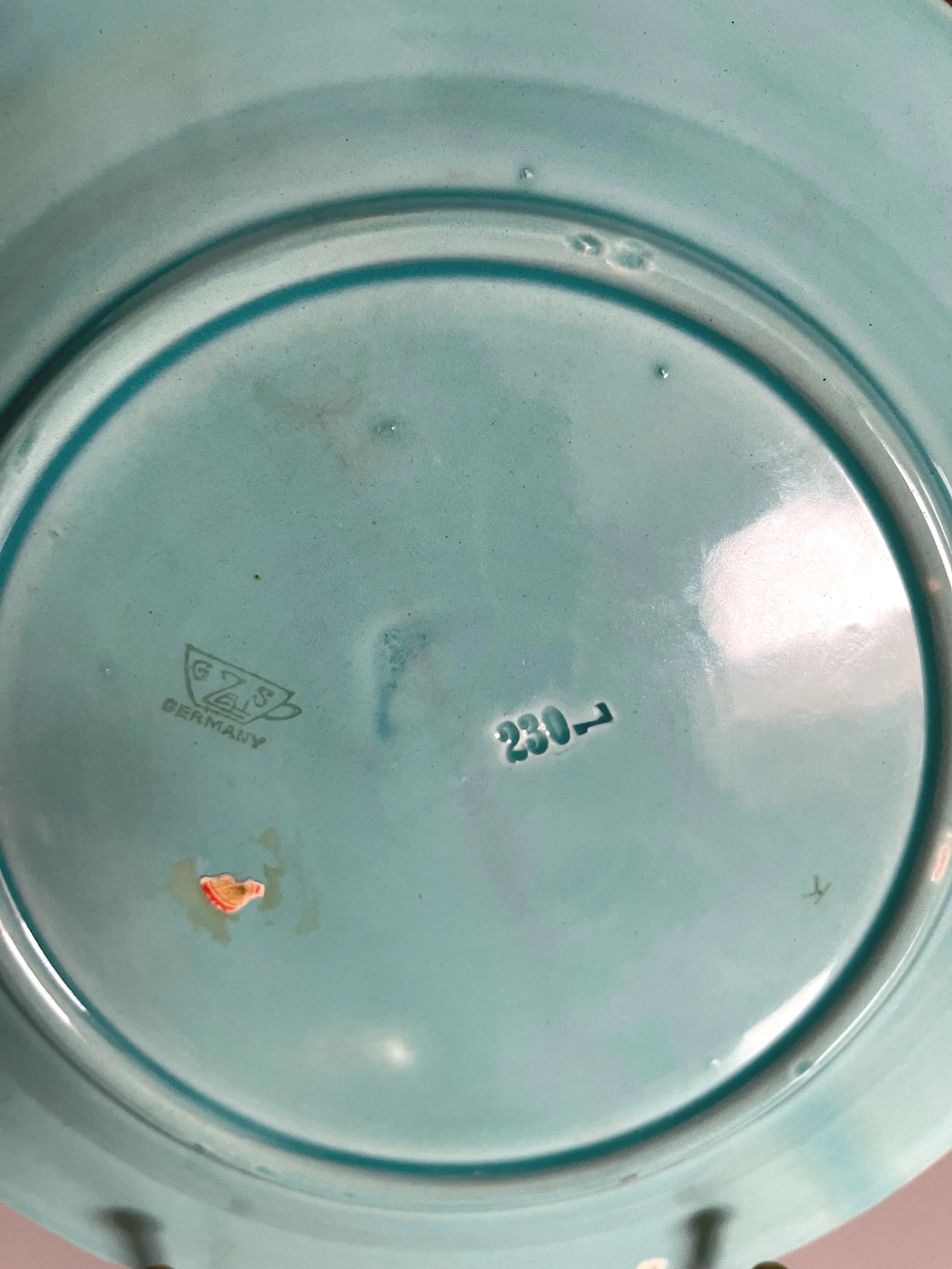
The image confirms the exact origin of the majolica plate, showing the authentic "G.S. Zell" factory backstamp alongside the impressed mold number 230.
The combination of marks provides precise details about its history:
The Factory Shield: The printed shield logo containing the stylized initials "GZ" wrapped in an "S" represents Georg Schmider, Zell am Harmersbach (Zeller Keramik), located in the Baden-Württemberg region of Germany.
Chronological Window: The specific layout of this green underglaze shield mark with "GERMANY" printed cleanly underneath was actively used by the pottery factory between 1907 and 1928.
The Mold Identifier: The deeply impressed number 230 represents the official factory design code for this specific "Birds and Grapes" high-relief pattern series. The small horizontal slash symbol next to it was a quality control mark used by the craftsman who glazed the plate.
This antique plate is an authentic piece of German Black Forest art pottery crafted between 1907 and 1928, making it approximately a century old.
This object is an authentic antique German majolica plate (Model 230), meticulously crafted between 1907 and 1928 by the Georg Schmider factory in Zell am Harmersbach (Zeller Keramik), located in Germany’s historic Black Forest region. The piece is distinguished by its vibrant, high-gloss turquoise tin-glaze background, which showcases an intricate, high-relief molded design of two songbirds perched amidst climbing grapevines, ripe purple grape clusters, and detailed autumn foliage. On the reverse, the plate bears the definitive underglaze green "GZ" shield backstamp and the deeply impressed factory mold number 230, marking it as a premium specimen of early 20th-century European earthenware art pottery.
Excellent condition. No cracks. Teeny, teeny tiny chippy spot of paint loss on reverse side of plate where a plate hanger once held it onto a plate wall. Does not effect the front side of plate in any way. Bright and cheerful. Vivid color. Today, this antique dish seamlessly blends history with modern functionality. Always hand-wash only to protect the delicate hand-painting and glaze.
In 2026, this century-old plate has found renewed relevance at the forefront of the "Maximalist Eclectic" and "Whimsical Nature" interior design movements. As homeowners move decisively away from flat, sterile textures, designers are utilizing high-relief majolica to add literal dimension, rich organic color, and historical narrative to living spaces. The striking combination of vivid turquoise and sculpted pottery makes it highly sought after for creating curated, three-dimensional "plate walls" and dynamic tablescapes that seamlessly blend old-world European charm with contemporary maximalist styling.
Furthermore, this Zell plate stands as a remarkably well-preserved example of historic ceramic engineering and artisanal craftsmanship. Majolica’s soft earthenware body makes it notoriously fragile and prone to destruction, meaning pieces that have survived the geopolitical shifts of Europe over the last hundred years intact are increasingly rare. In a 2026 consumer market that deeply prizes authenticity and sustainable preservation over mass-produced replicas, this authentic Black Forest artifact offers collectors a tangible, durable connection to pre-war European artistic history.
The image confirms the exact origin of the majolica plate, showing the authentic "G.S. Zell" factory backstamp alongside the impressed mold number 230.
The combination of marks provides precise details about its history:
The Factory Shield: The printed shield logo containing the stylized initials "GZ" wrapped in an "S" represents Georg Schmider, Zell am Harmersbach (Zeller Keramik), located in the Baden-Württemberg region of Germany.
Chronological Window: The specific layout of this green underglaze shield mark with "GERMANY" printed cleanly underneath was actively used by the pottery factory between 1907 and 1928.
The Mold Identifier: The deeply impressed number 230 represents the official factory design code for this specific "Birds and Grapes" high-relief pattern series. The small horizontal slash symbol next to it was a quality control mark used by the craftsman who glazed the plate.
This antique plate is an authentic piece of German Black Forest art pottery crafted between 1907 and 1928, making it approximately a century old.